The A+ Setup: How I Grade Every Trade Before I Take It
For years, I traded on vibes. "This looks good." "I feel it." "It's probably going up." My account kept a perfect record of how well that worked.
Then I built a scorecard. Every setup gets graded before I touch it. Ten points, four categories, ten seconds. Under 7 out of 10, I don't take it. That one rule filters more bad trades than any indicator I ever bought.
An A+ setup is not a feeling. It is a checklist. If all the boxes aren't checked, it is not A+. Period.
Why grading setups changed everything
B setups win just often enough to keep you hooked and broke. That is the trap. A B setup pays you sometimes, so you keep taking them, and over a hundred trades the math quietly eats your account.
The scorecard gave me permission to sit out. That was the real unlock. Most traders think their problem is entries. Their problem is taking trades they never should have considered.
When you only take A+ setups, everything improves at once. Your conviction is higher because the setup earned it. Your invalidation is clearer because structure defined it. Your stress drops because you are not defending mediocre ideas all day.
My A+ setup scorecard: the 10-point system
Here is the exact card. Four categories, ten points total.
Market structure: 2 points. I trade with the higher-timeframe trend. Clear higher highs and higher lows for longs, lower highs and lower lows for shorts, or zero points. Fighting the trend is volunteering to be the liquidity. Alignment is the foundation, not a bonus.
Liquidity Sweep: 3 points. The biggest single category, because it is the engine. I need a major level swept with a clean stop hunt: the wick pierces the level and snaps back. No sweep, no fuel, no reversal. Without it the max score is 7, and I need 7.
PSS confirmation: 3 points. The Directional Shift printed, the Structure Break Point confirmed, follow-through holding. A sweep without confirmation is just volatility with a story. I don't pay full price for half a setup.
Entry model: 2 points. Full points only for the pullback into the 50 to 61.8 percent High-Value Zone. Entering on the impulsive candle, chasing the V, gets a zero. The entry is worth 2 points because it is where most traders donate theirs.
Add it up. 7 or higher: I take it with full size. Below 7: it is a spectator sport.
Want to see me grade setups live? I score every morning setup out loud inside the free Bulls Corner Discord before I take a single trade. Get in free here, just drop your email and you're inside.
How I use the score in real time
Ten seconds. That is all it takes once you have done it a hundred times.
I look at the chart and I run the card in my head. Trend aligned? Two points or zero. Sweep printed clean? Three or zero. Shift and break confirmed? Three or zero. Price pulling into my zone instead of extended? Two or zero.
There is no "well, it's close to 7." It is 7 or it isn't. The whole point of the card is removing judgment from the moment my emotions are loudest.
And here is the part most traders miss: the scorecard also tells me my size. A+ setups get full size. That is it. I don't trade B setups at half size to "stay in the game." B setups are how accounts die slowly. A+ or nothing sounds extreme until you run the numbers on "good enough."
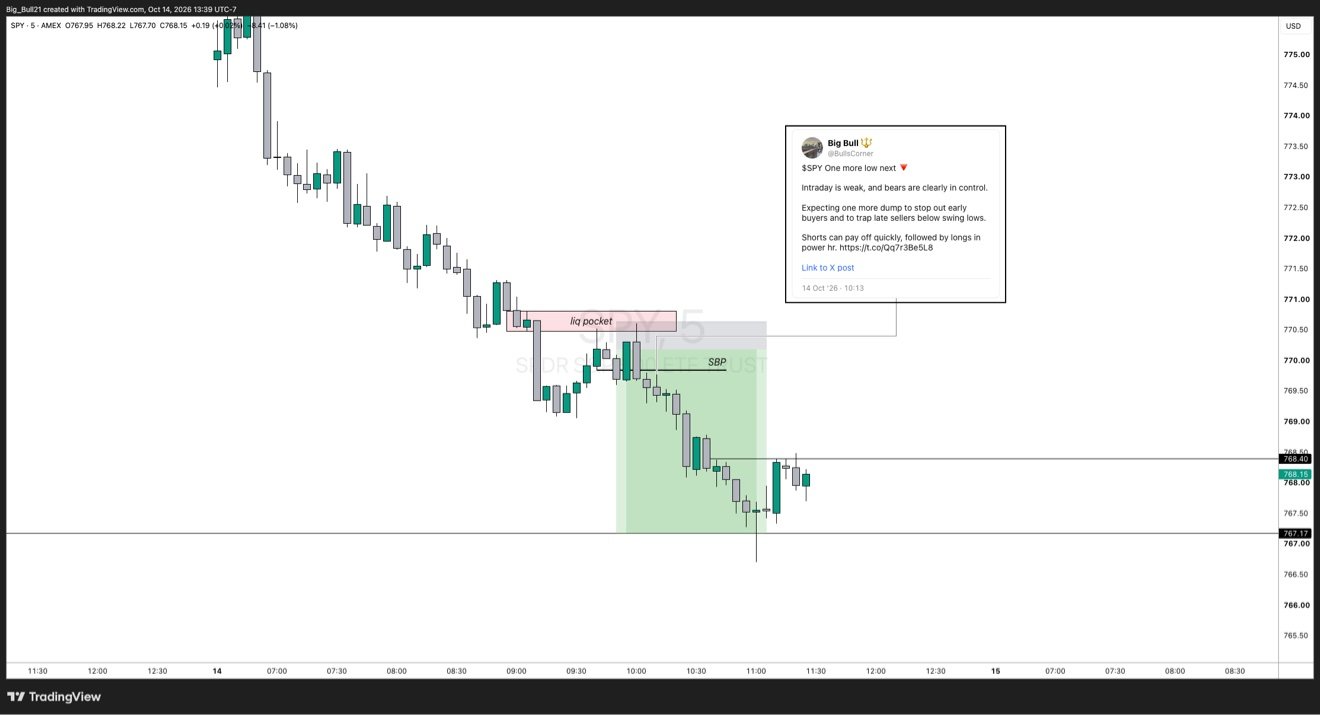
A worked example: grading a chart in ten seconds
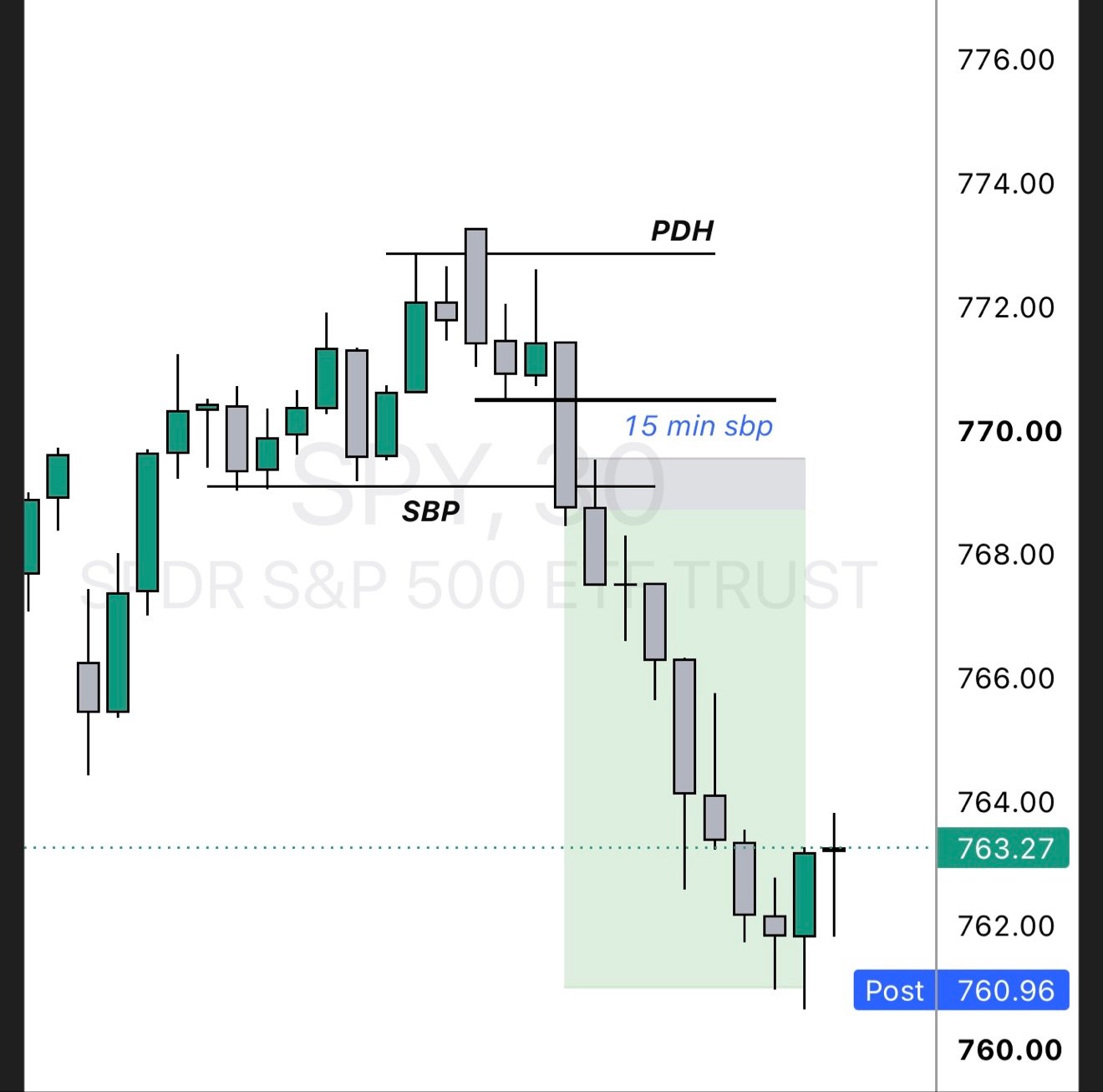
Run the card on this chart with me. First, market structure: price is making higher highs and higher lows, so the trend is aligned with a long. Two points. Next, the Liquidity Sweep: the swing low gets swept, the wick pierces the level, takes the stops, and closes back above. Clean stop hunt, three points. Then PSS confirmation: the Directional Shift prints with a strong body closing through the last swing high, and the Structure Break Point confirms with follow-through. Three more points.
That puts the setup at eight before I even look at the entry. Then price pulls back into the 50 to 61.8 High-Value Zone instead of running away extended. Full two points for the entry model, and the chart grades a ten. I can state the thesis in one breath: sweep under the low, shift through the high, break confirmed, entry in the zone, invalidation below the sweep low. The card says take it, so I take it at full size.
Now flip two pieces and watch the grade collapse. Suppose the sweep never printed and price runs extended instead of pulling back into the zone. Structure gives two, confirmation gives three, and the sweep and the entry both score zero. That is five, and the card says spectator sport. That is why I grade every piece separately. One missing ingredient changes the decision, and two missing ingredients end it.
A+ setups vs C setups
| A+ setup | C setup | |
|---|---|---|
| Score on the card | 7 or higher out of 10 | Below 7, usually missing the sweep or the confirmation |
| How often they show up | One or two a day, sometimes none | All day, every day, whenever you feel like trading |
| Conviction at entry | High, because the setup earned it | Borrowed, because you talked yourself into it |
| Invalidation | Clear, below the sweep low or above the sweep high | Vague, wherever it starts hurting |
| What I do with it | Full size, no hesitation | Nothing, it is a spectator sport |
The rules around the card
Explain it or skip it. Before every entry, I state the thesis in one breath: sweep where, shift where, entry zone, invalidation. If I can't say it that fast, it is not a setup. It is a gamble.
FOMO says take it, the card says show me 7. FOMO says take it, boredom says take it, revenge says take it. The scorecard is an external brain for when my internal one is compromised. Systems beat willpower every single time.
One or two setups a day is enough. I only need 1 to 2 clean setups a day. I don't need five or ten trades. Smaller timeframes give more setups but worse quality, so I stay on 5 to 15 minute minimums. Patience on the higher timeframe is the whole edge.
Judge the process, not the P&L. A stopped-out A+ setup is a good trade. A winning forced trade is a bad one. I score my execution, not my outcomes, because outcomes lie in the short term and process compounds.
What the card killed in my trading
It killed the "this looks good enough" disease. It killed revenge entries, because a tilted brain can't fake a 7. It killed overtrading, because most days only produce one or two setups that actually score.
Most importantly, it killed my ego's vote. I don't get to argue with the card. The card doesn't care how I feel about the trade. That is exactly why it works.
I trade $SPY and $QQQ 0DTEs every morning, and every setup gets graded before I touch it. The free Discord is where it happens, join free.
And if you want the whole thing, every setup, every alert, plus my full course: the 7-day free trial gets you inside Premium free for a week.
See you at the next A+.
Free download: Want my exact grading sheet? Grab the A+ Setup Rating Guide free here.
Watch: Turn Sweeps Into A+ Setups With This ONE Confirmation
FAQ
What is an A+ setup in trading?
An A+ setup is a trade where multiple independent factors align in your favor: trend alignment, a Liquidity Sweep, structural confirmation, and a planned entry zone. In my system, it means the setup scores 7 or higher out of 10 on my four-category scorecard. It is a checklist grade, not a feeling.
How do you grade a trade setup before entering?
I run a 10-point scorecard: market structure (2 points), Liquidity Sweep (3 points), PSS confirmation via Directional Shift and Structure Break Point (3 points), and entry model (2 points, only for pullback entries into the High-Value Zone). The whole grade takes about ten seconds once practiced. Below 7, I skip the trade entirely.
Should you only trade A+ setups?
That is exactly what I do. B setups win just often enough to keep you hooked while the math quietly drains your account. Only taking A+ setups means fewer trades, but higher conviction, clearer invalidation, and less stress. Most traders don't need more trades. They need fewer, better ones.
What is the minimum score for taking a trade?
7 out of 10. That is my hard floor. The Liquidity Sweep alone is worth 3 points because it is the engine of the reversal, so a setup without a sweep can barely qualify even if everything else is perfect. No rounding up, no "close enough."
Can a setup score 7 without a Liquidity Sweep?
Barely, and only if everything else is perfect. The sweep is worth three points, so without it the maximum score is seven: two for structure, three for confirmation, two for the entry. It qualifies on paper, but I treat a seven with no sweep very differently from a seven with one. The sweep is the engine, and a setup without an engine needs a very good reason to take.
Should I ever take a setup that scores 6?
No. Six is not "close to seven," it is below the line, and the line is the whole point. The moment I start rounding up, the scorecard becomes decoration and my feelings are grading again. A six is a trade I watch, learn from, and let go. The next seven will come.
Does the scorecard work on tickers other than SPY and QQQ?
The categories are the same on any liquid ticker: trend alignment, sweep, confirmation, entry in the zone. What changes is the quality of the levels and the fills. I trade SPY and QQQ because the liquidity is deepest and the levels are cleanest. On a thin name the sweep can be sloppy and the card grades a mess, so I keep the scorecard where it was built.
Trade this live with me
I call every step of this model out loud, every morning, inside the free Discord.
Join the FREE DiscordStart 7-day free trial
7-day free trial, then $90/mo. Cancel anytime.
Keep reading
Red Day Recovery: My Exact Protocol for Bouncing Back The Trader's Contract: The Commitment I Signed With Myself Stop Loss Placement: Why I Hide Mine Beyond the ManipulationRisk note: everything on this blog is educational content from my own trading experience, not financial advice. Trading options involves substantial risk of loss.